A crack in your new smartphone screen is an expensive nightmare, but the huge choice of protective films and glass panels makes picking the best screen protector overwhelming. With all the technical terms and materials, it's easy to lose track. In this article, you'll find out exactly how the materials and finishes differ, so you know right away which screen protector to buy for your mobile phone and lifestyle. That way you avoid buying the wrong one and keep your device properly protected.
Which type of screen protector is best for your smartphone?
Good screen protection starts with the right material for your specific smartphone. Which screen protector you choose depends directly on the shape of your screen and on whether you want maximum drop protection or subtle scratch protection. A flat display needs a completely different screen protector than a phone with strongly curved edges.
Want the best screen protector against hard knocks on the pavement? Or are you after a wafer-thin screen protector that stops surface scratches from the keys in your pocket?
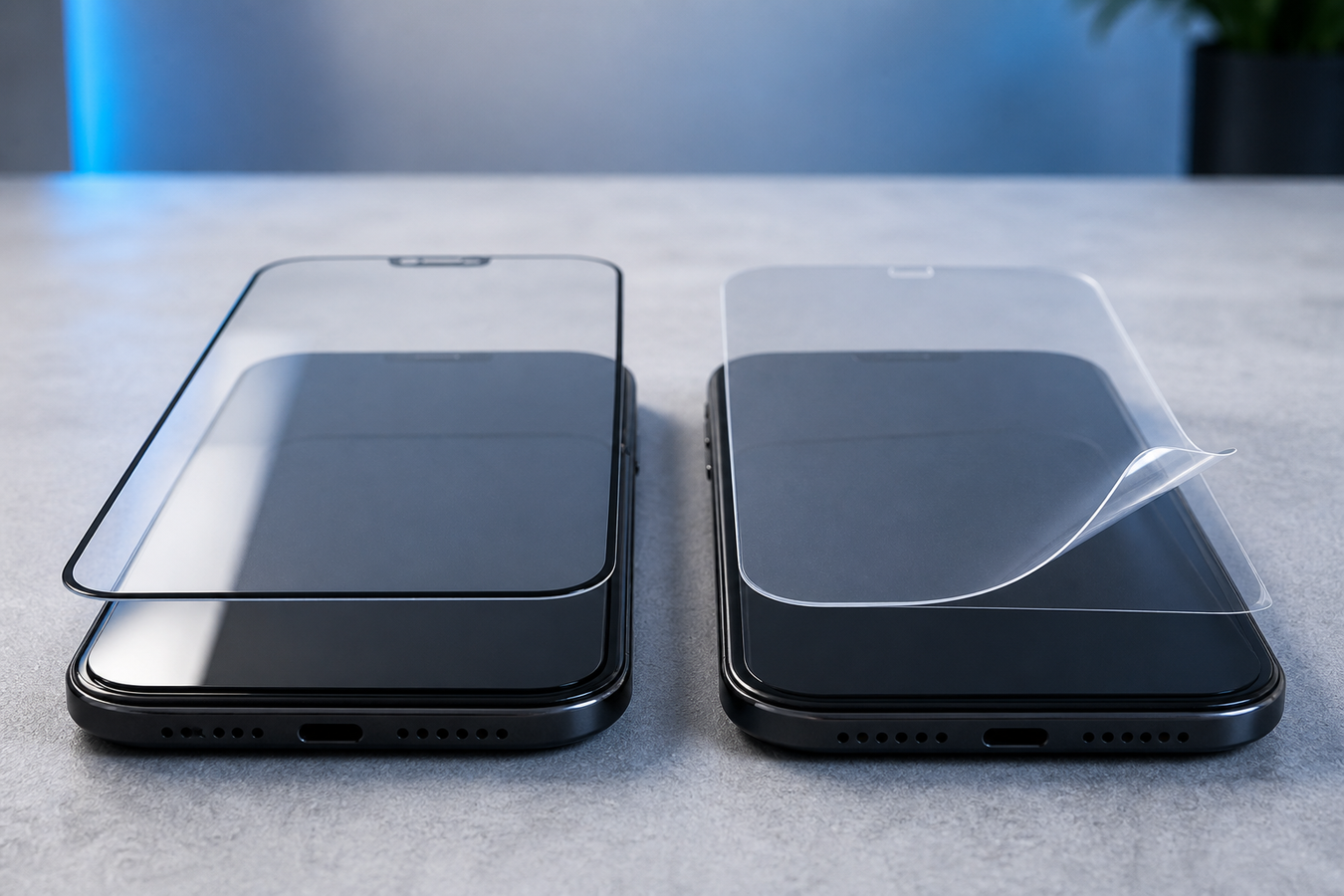
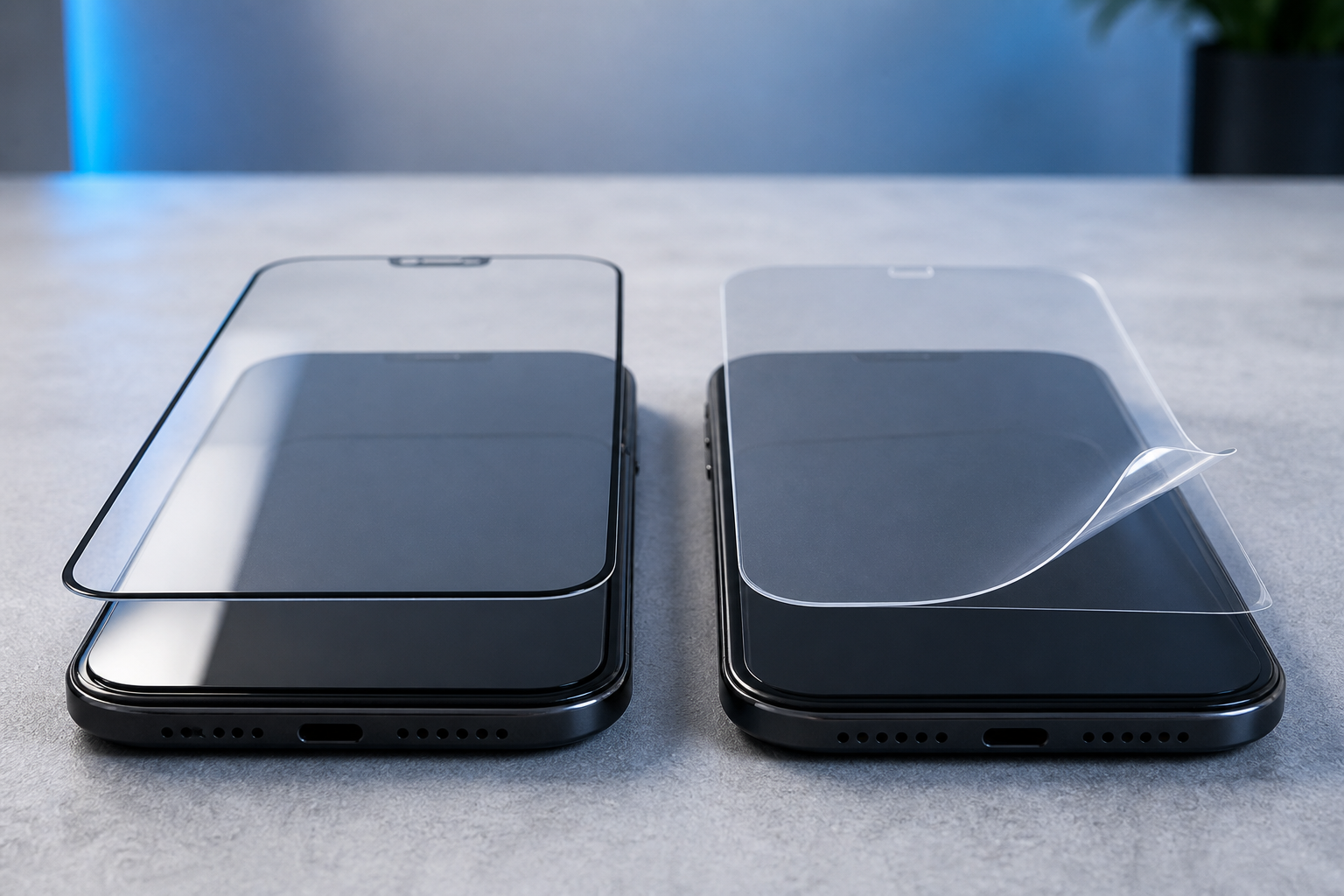
Glass screen protectors (tempered glass)
Superior drop protection: Offers the best protection against hard drops and deep scratches. A tempered glass screen protector absorbs the impact and breaks itself, so your original display stays intact.
Original touch experience: Keeps the original touchscreen sensitivity and clarity of your smartphone screen. Your finger glides smoothly over the screen protector, unlike grippier plastic materials.
Extremely scratch-resistant: Often labelled 9H hardness on the Mohs scale for maximum scratch resistance. Keys and coins don't stand a chance against this type of screen protector.
Strong alternative: Hybrid glass, a clever mix of glass and plastic, is sometimes used instead. A hybrid glass screen protector is slightly more flexible and less likely to shatter than pure tempered glass.
Choose a tempered glass or hybrid glass screen protector if you want maximum peace of mind and your phone has a completely flat screen.
Plastic and hydrogel screen protectors
Kenmerk |
Plastic / hydrogel screen protector |
Glass screen protector |
|---|---|---|
Screen shape |
Ideal for phones with curved screen edges, where glass often lifts. |
Perfect for flat screens, struggles to stick to curves. |
Fingerprint scanner |
Works smoothly with ultrasonic in-display fingerprint scanners. |
Can sometimes cause a delay with older in-display sensors. |
Level of protection |
Protects very well against surface scratches, but absorbs the impact of a drop less effectively than glass. |
Offers maximum impact protection when dropped hard onto stone. |
Flexibility |
Bends easily. Doesn't tear or shatter on impact. |
Breaks under heavy impact to absorb the energy. |
Choose a plastic screen protector if you have a Samsung Ultra or another model with an edge screen, or if you need your fingerprint scanner to respond really quickly. Avoid a plastic screen protector if you often drop your phone.
Special finishes: from Ultra-Clear to Privacy
Type of finish |
Features & benefits |
Ideal user |
|---|---|---|
Ultra-Clear screen protector |
The standard choice for 100% colour accuracy and maximum sharpness. You'll barely notice there's a screen protector on. |
The all-round user who edits photos or watches a lot of videos. |
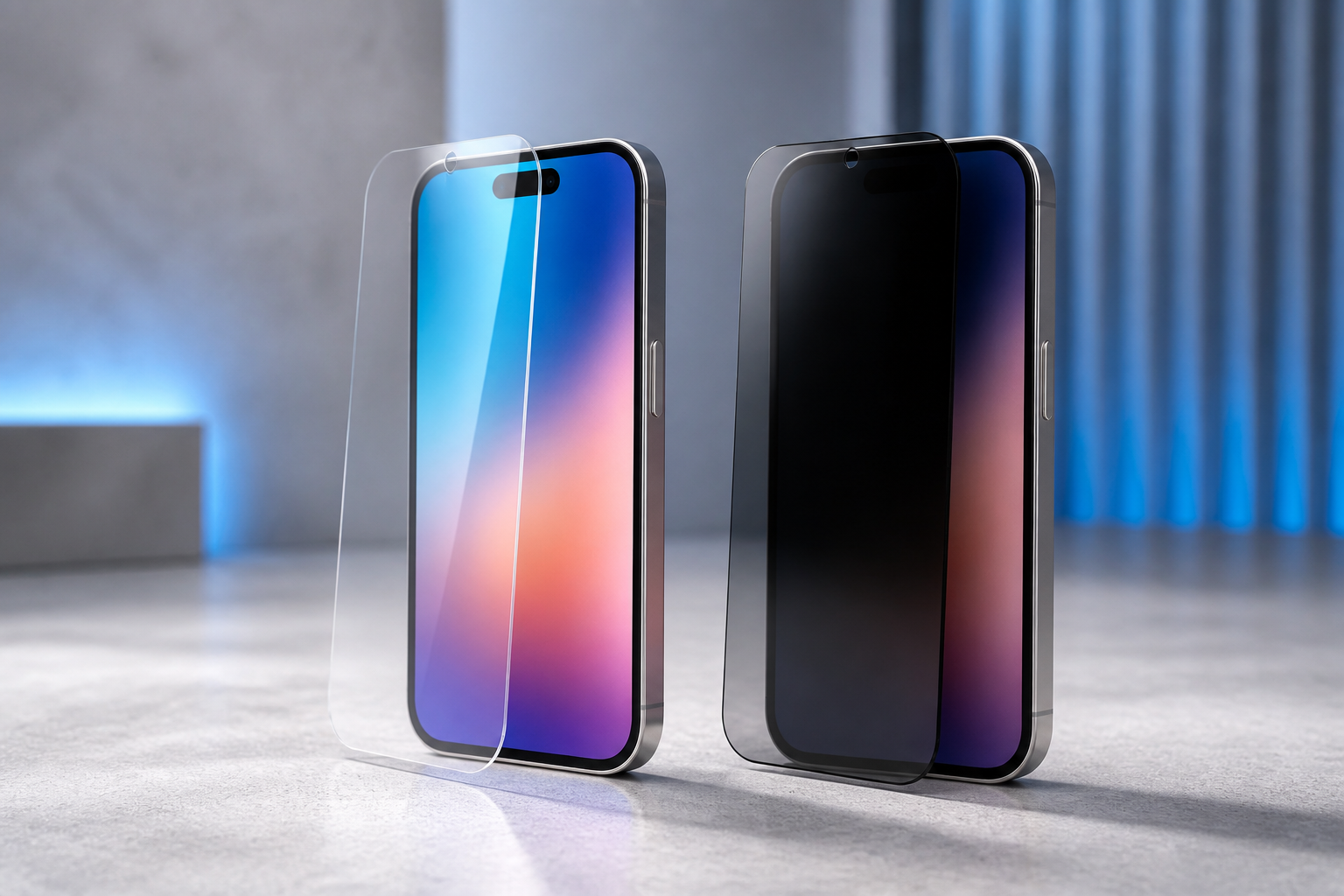
Privacy screen protector |
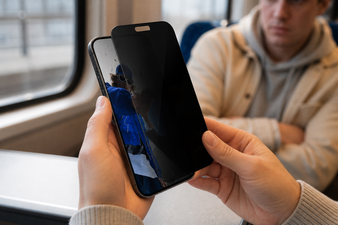
Blocks side viewing angles. The screen looks black to people nearby, while you get a perfect picture looking straight on. |
Ideal on public transport or when working in a busy office. |
Anti-glare / Matte screen protector |
Reduces annoying reflections from sunlight and bright lights. Does make the screen a touch less sharp. |
People who work outdoors a lot or are bothered by reflective office lighting. |
Paper-feel screen protector |
Offers paper-like resistance thanks to a special micro-texture on the screen protector. |
Perfect for drawing, designing and writing with a stylus on tablets. |
Choose a privacy screen protector if you often work with sensitive information on the train. Go for an Ultra-Clear screen protector if you want to keep your smartphone's picture quality and brightness unchanged.
What should you look for when buying?
Check for a case-friendly fit: If you use a phone case, always choose a case-friendly design to stop the edges lifting. A case-friendly screen protector is cut slightly smaller, so the edge of your case doesn't push the glass up.
Check your exact phone model: Double-check the exact model and year of your phone, as sizes vary between generations. An iPhone 13 screen protector simply won't fit an iPhone 14 perfectly.
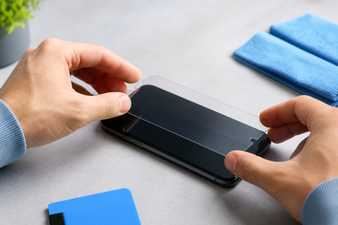
Look for installation help: Check whether an installation frame is included for flawless application. You clip this plastic frame over your phone, so the screen protector lines up perfectly straight every time.
Hygiene extras: Consider an antibacterial screen protector for extra hygiene.
Choose the right material: Decide whether standard tempered glass or hybrid glass suits you better. Hybrid glass is thinner and less likely to break when the edges take a knock.
Never order a screen protector blindly based on the packaging. Always check your settings under 'About phone' for the correct model name and look specifically for a case-friendly screen protector.
Want to keep your phone safe?
Prevent scratches and damage with the right screen protector for your phone.
View all screen protectorsFAQs about protective glass and films
How long does a screen protector last?
On average, a screen protector lasts 6 to 12 months, depending on how heavily you use your phone. If you often keep your smartphone in the same coat pocket as your keys, the screen protector's dirt-repellent coating wears off much faster. Replace a plastic screen protector as soon as it turns cloudy or starts lifting at the corners.
What does military grade mean?
It's often an exaggerated marketing term, so focus on the material itself instead. Brands use 'military grade' to suggest extreme toughness, but there's no standardised test for a screen protector. Look at proven properties such as hybrid glass, 9H hardness or Ultra-Clear rather than tough-sounding slogans on the packaging.
Is a cracked screen protector harmful?
Yes. It no longer protects your screen and glass splinters can be dangerous, so replace it straight away. A crack in your screen protector means the structural tension in the material is gone. The next time you drop your phone, the screen protector won't absorb the impact, so the force goes straight to your actual smartphone screen.
For most smartphones, a case-friendly tempered glass screen protector is the safest choice, unless you have a curved screen or specific needs such as privacy or a matte finish. Search for your exact phone model and order the screen protector that best suits your lifestyle.