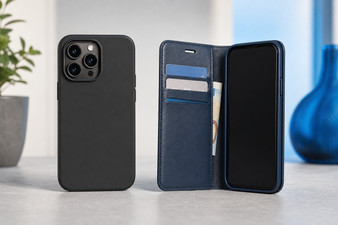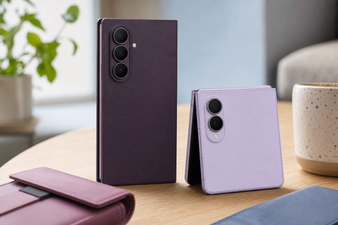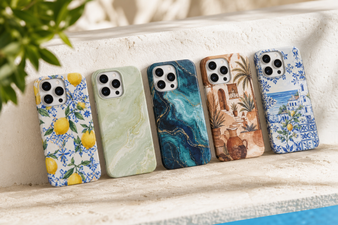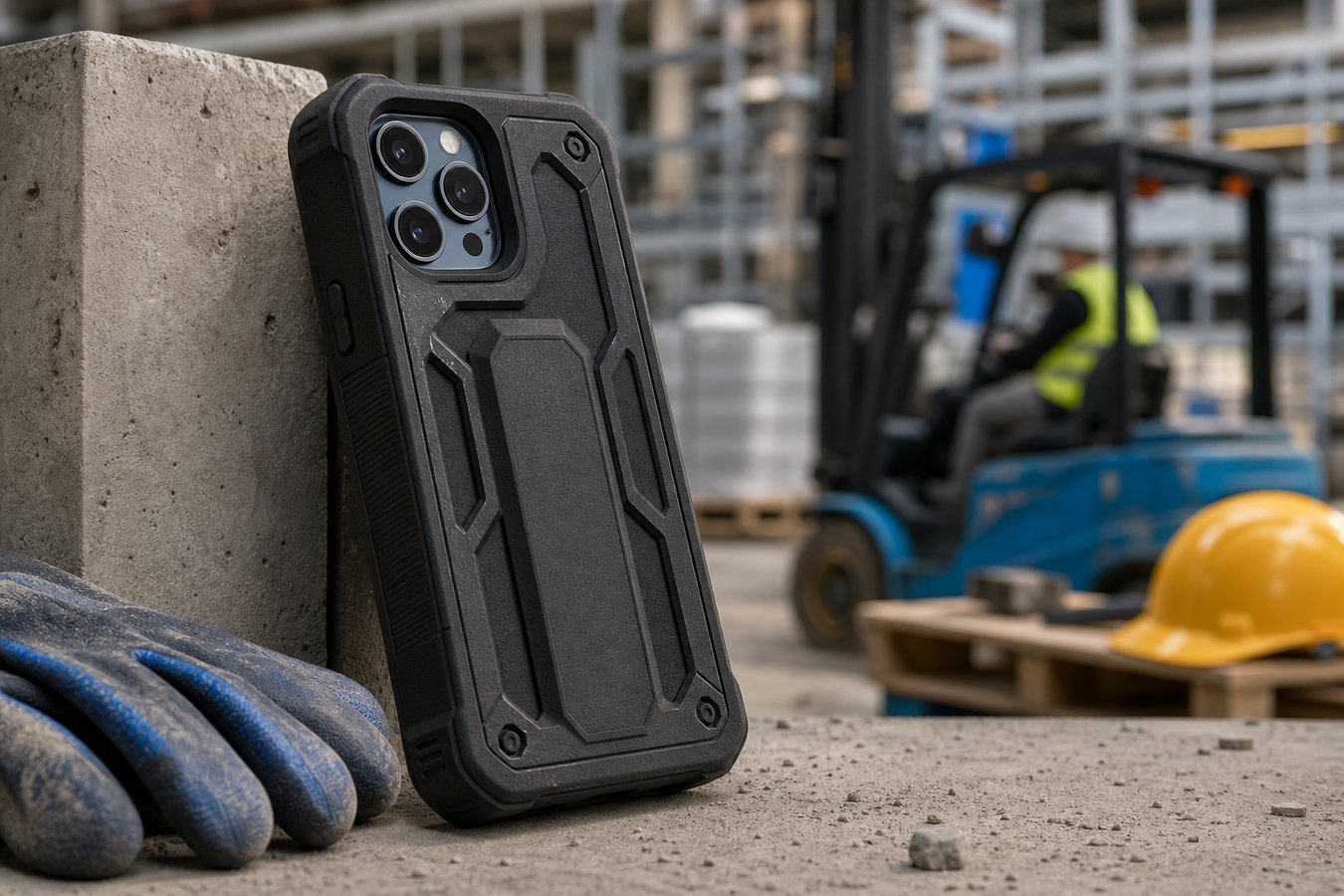
A broken smartphone on site costs you money and throws your whole working day off. Without a working phone, you can't check drawings, call suppliers or sign off delivery notes. A good shockproof phone case for construction and logistics keeps your device safe from drops, dust and water. Here's which phone cases work best and how to pick the right one for your daily jobs, so your kit works as hard as you do.
What makes a phone case suitable for construction and logistics?
A standard silicone case simply won't survive a fall from scaffolding. When you buy a construction phone case, always check that it meets these tough technical requirements:
Shockproof materials: Go for a rugged build with shock-absorbing TPU (thermoplastic polyurethane) combined with a hard polycarbonate outer shell.
Full 360-degree protection: Fine dust, cement powder and debris quickly get into the smallest gaps. A sealed design keeps dust out of the charging port and speakers.
Grip and handling: Slippery materials are useless on a building site. Look for cases with a ribbed texture or rubber inlays. That way you can keep a firm hold on your phone even when you're wearing thick work gloves or your hands are wet from the rain.
Raised edges (bumpers): Edges that sit just above the screen and camera lens take the first hit. This stops the glass taking a direct impact when your phone lands flat on a rough concrete floor.
Why a separate screen protector is a smart addition
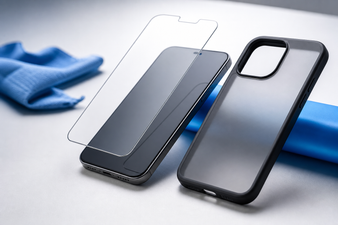
A tough back cover protects the body of your phone, but leaves its most vulnerable part exposed. A tempered glass screen protector guards against scratches from loose screws, utility knives or keys sitting in your work trousers alongside your phone. The packaging often says 9H. That's the hardest grade on a pencil scratch test: keys and coins won't leave a mark. Sand and stone grit are harder, though, and can still scratch the glass. The glass also often has a dirt-repellent coating, so cement dust is less likely to stick.
Does your phone land screen-first on a protruding stone or a piece of scaffold tube? The screen protector takes the hit. Often only the extra layer of glass cracks and your original display stays completely intact. A new protector is far cheaper than a new screen.
Combining a rugged case with raised edges and a good screen protector gives your phone the best protection. Make sure you choose a 'case-friendly' version, though. These sit just inside the edges of the screen, so the tight edges of the case don't push the glass up.
Practical features for the job site: more than just protection
Besides extreme drop protection, handy extras decide how practical a rugged phone case really is day to day. In logistics and construction, you don't have time for fiddly accessories. Look out for these practical features:
Phone rings and lanyards: Secure your device around your neck with a phone strap or clip it to your belt with a sturdy carabiner. This stops your phone from sliding out of your pocket when you bend down, load a van or climb a ladder.
Port covers: Dust and moisture in the USB-C or Lightning port cause charging problems and short circuits. Rubber flaps keep out grit and raindrops, which is handy if you work outdoors in all weather.
Touchscreen sensitivity: A thick case shouldn't get in the way of using your phone. Make sure the case fits snugly, so you can still zoom and swipe through drawings, barcodes or delivery notes smoothly, even with slightly damp fingers.
Clear cases with reinforced edges: For anyone who wants to keep the original look of, say, a work phone. The thick, shock-absorbing bumpers all around still give you the protection you need without making the device bulky.
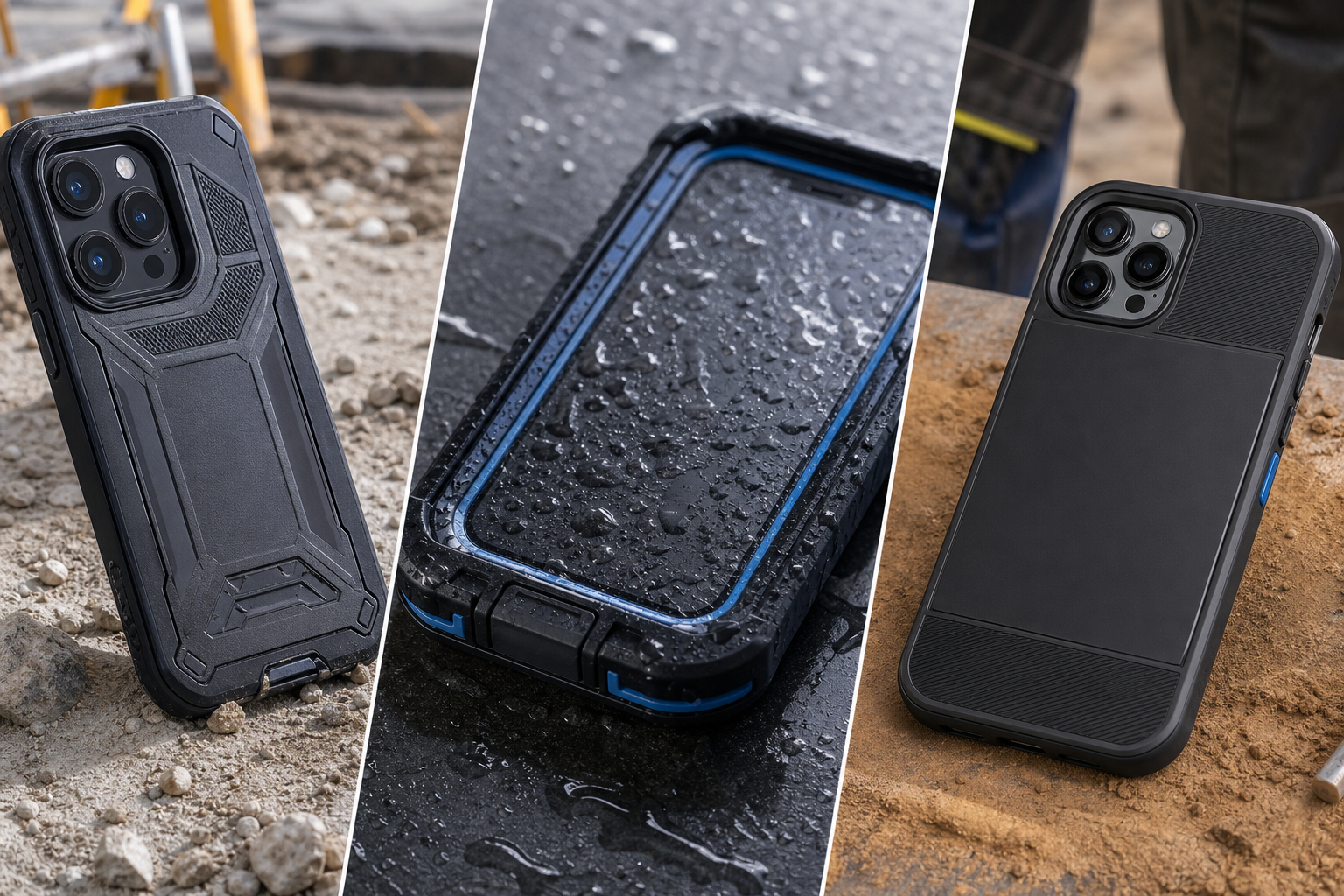
Comparison: which type of heavy duty case suits your job?
Case type |
Features |
Ideal for |
|---|---|---|
Extreme drop protection |
Multiple layers of material, extra-thick bumpers. |
Scaffolders, roofers and paviors whose phones can fall from height or onto hard stone. |
Splash-proof and dustproof |
Sealed ports, snug fit, often with a built-in screen film. |
Logistics and warehouse staff and outdoor workers who work in the rain or in dusty warehouses (waterproof phone cases). |
Hybrid cases |
Slim profile, tough edges, fits easily in a blazer or close-fitting work trousers. |
Site managers and supervisors who also use their phone for business away from the site. |
Choose extreme drop protection if you work at height every day, operate heavy machinery and need maximum protection on site. Choose splash-proof and dustproof cases if you handle a lot of liquids in logistics, or stand in mud every day as a groundworker. Choose a hybrid case if you want a tough phone case that doesn't feel like a brick. It's the best option for project managers who drive straight from a site visit to an office meeting, where the phone still needs to look professional.
Popular heavy duty phone cases
Step by step: make your smartphone work-ready for construction and logistics
Follow these four steps and your phone is ready for the job.
-
1
Clean your phone thoroughly
Switch your phone off and wipe the outside with a cloth dampened with 70% alcohol. Don't let any moisture get into the openings. Otherwise, any grains of sand and building dust left behind will scratch the body once the case is on.
-
2
Fit an extra screen protector
Carefully apply a tempered glass screen protector if your chosen case doesn't come with one. It absorbs the direct, sharp impact of falling tools and stops your expensive original display from shattering.
-
3
Fit the rugged back cover
Snap the heavy duty, shockproof phone case firmly onto your device and check all the edges. Make sure the case fits properly everywhere, so the raised edges protect your screen and camera if you drop it on a hard concrete floor.
-
4
Add drop prevention
Attach a metal phone ring or a universal wrist strap to the back of the case. This helps prevent drops during quick tasks in the warehouse or up on the scaffolding: if your mobile phone slips out of your hand, it stays safely attached to your wrist or finger.
FAQs about phone protection on site
Is a 360-degree case always better than a back cover with a screen protector?
No, 360-degree protection isn't automatically better, but it does offer a different kind of protection. A fully sealed case keeps out building dust and splashes far more effectively, which is ideal for plasterers or woodworkers. A back cover combined with tempered glass, on the other hand, is nicer to type on, responds faster to touch and keeps the screen clearer in direct sunlight.
Will my phone still work smoothly in an extra-thick shockproof case?
Yes, a good shockproof case has cut-outs or raised buttons that sit exactly over your phone's buttons. The case leaves the screen clear, so you use your phone just as you normally would. Handy tip: choose a case made for your specific phone model.
What's the best way to clean my rugged phone case after a long, dusty day at work?
First, take your phone out of the case. Use a cloth with 70% alcohol or a damp microfibre cloth to clean the inside of the case thoroughly, removing all lint and dust. A soft, dry brush, such as a clean paintbrush or an old toothbrush, makes it easy to sweep stuck-on grit and building dust out of the edges and corners. Avoid harsh cleaning products, as they damage the rubber. Give the case one last wipe with the cloth before you put your phone back in.
The right drop-resistant, dustproof phone case prevents expensive repairs and lets you keep working safely in any conditions. That way, your colleagues and customers can always reach you. Browse the wide range of heavy duty phone cases at directcases.com and order solid protection for your phone today.