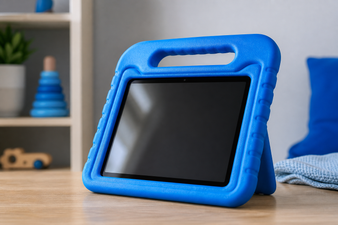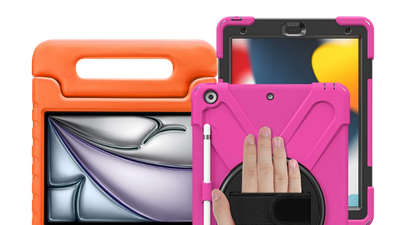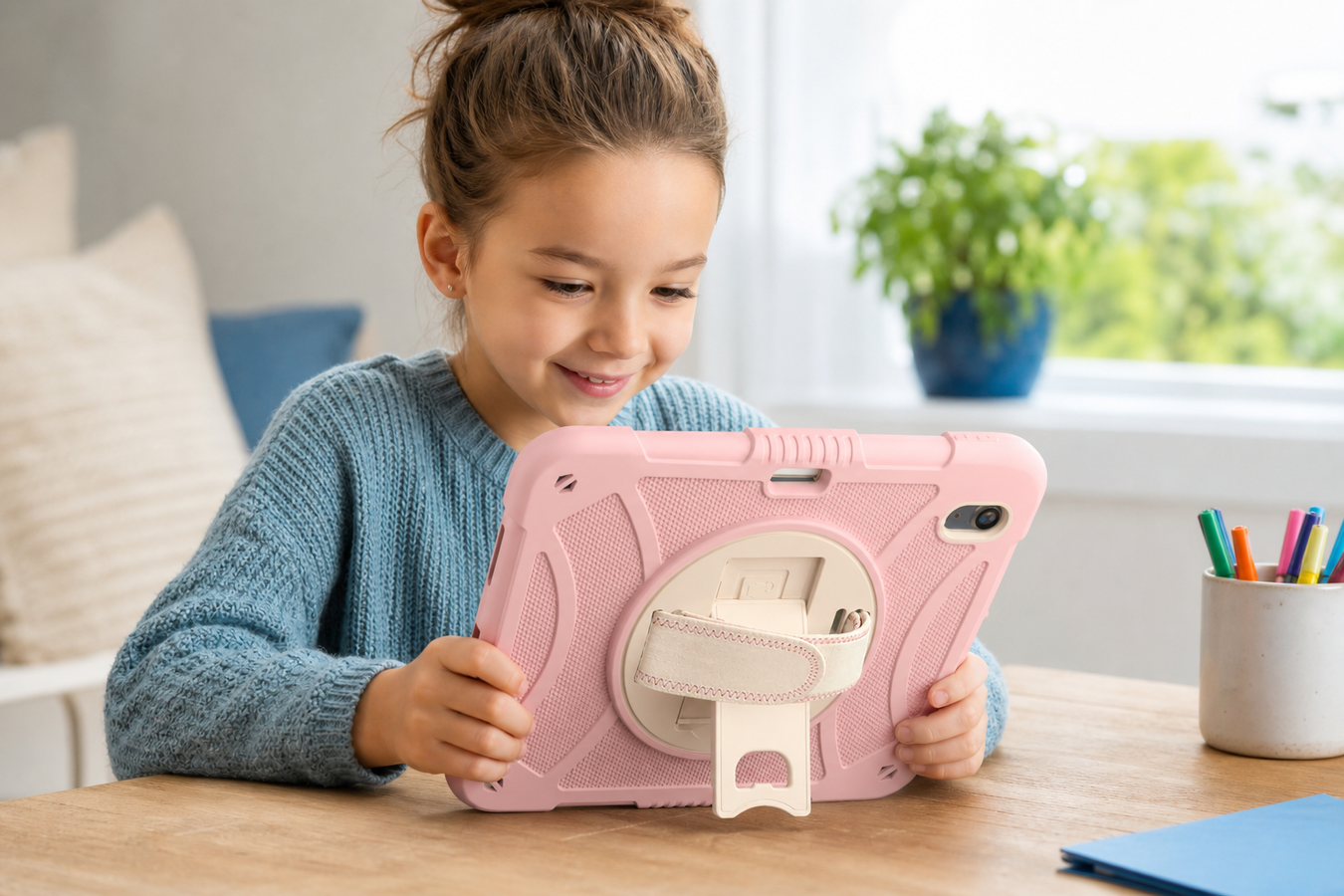
A childproof iPad case mainly protects against drops and knocks. EVA foam or silicone, extra grip, a handle and sometimes a stand make the iPad easier for small hands to manage.
Your child's age, how they use the iPad and the exact iPad model determine which case fits best. Look at the material, the features and the fit. Also check whether extra screen protection is needed or included.
What is the best iPad case for kids?
For most children, a sturdy EVA case with reinforced corners, good grip and ideally a handle is the best choice. What suits your child depends on their age, how they use the iPad, how likely it is to be dropped and the exact iPad model. A case for use at home doesn't need to be as portable as one for school or travel.
Check the edges: choose a shock-absorbing edge with reinforced corners to handle a fall from a table or sofa. A sturdy back protects against scratches, and raised edges spare the screen if the iPad lands flat.
Grip and weight: look for good grip and low weight. A child-friendly design helps small hands hold the iPad more easily.
Handle: choose a sturdy handle or carry grip if your child often carries the iPad around. It gives them a fixed place to hold on to and can reduce the chance of drops.
Cut-outs: check all the cut-outs for the camera, buttons, speakers and charging port. The case should protect without making filming, sound, controls or charging awkward.
Screen: a kids case doesn't always protect the screen; add a matching screen protector if needed.
Fit: match the fit to the model number, not just the screen size. A case that doesn't quite fit protects poorly and can block ports.
Which kid-proof iPad case suits toddlers, preschoolers and older kids?
For toddlers, a lightweight EVA kids case with a wide grip, thick corners and a sturdy handle works best; older kids often get more out of a case that's slim and easy to carry.
The right choice depends on age and how the iPad is used.
| Age | Use | Protection needed | Recommended features |
|---|---|---|---|
| Toddlers | At home and on the go | Maximum protection | Lightweight EVA, wide grip, thick corners and sturdy handle |
| Preschoolers | At home, learning and playing | Drop protection and stability | EVA case with good grip and built-in stand |
| Older kids | School, travel and everyday use | Sturdy edges without much extra weight | Slimmer silicone or TPU model, easy to carry independently |
At home, grip and a stable stand matter most. For school, travel or active use, sturdy edges, portability and extra protection carry more weight. Don't choose a thin model for a toddler: it's lighter, but absorbs a hard fall less well.
Which iPad case materials are safest for kids?
EVA foam usually absorbs a fall best. Silicone or TPU mainly add extra grip, so the iPad is less likely to slip out of small hands. Beyond that, the best choice depends on age, use and how often the iPad gets dropped.
| Material | Grip | Shock absorption | Weight | Flexibility | Cleaning | Suitable for |
|---|---|---|---|---|---|---|
| EVA foam | Good, thanks to wide edges | High | Light | Holds its shape | Easy with a damp cloth | Toddlers, preschoolers and heavy use |
| Silicone | High, less likely to slip | Good | Medium | High | Usually easy | Home use and kids who hold the iPad a lot |
| TPU | Good | Good | Medium | High | Mostly easy | School, travel and everyday use |
Choose EVA foam if drop protection and low weight come first. This light foam is soft and comfortable for long periods of use. Silicone is the right pick when grip is the biggest issue, since smooth materials slip out of hands more easily. TPU suits older kids who want a slimmer, flexible and hard-wearing case.
No material is automatically the safest. Thick edges, reinforced corners, a good fit and a clean finish matter at least as much. Avoid a thin case for a toddler who often drops the iPad; go for a light EVA case with extra edge protection instead.
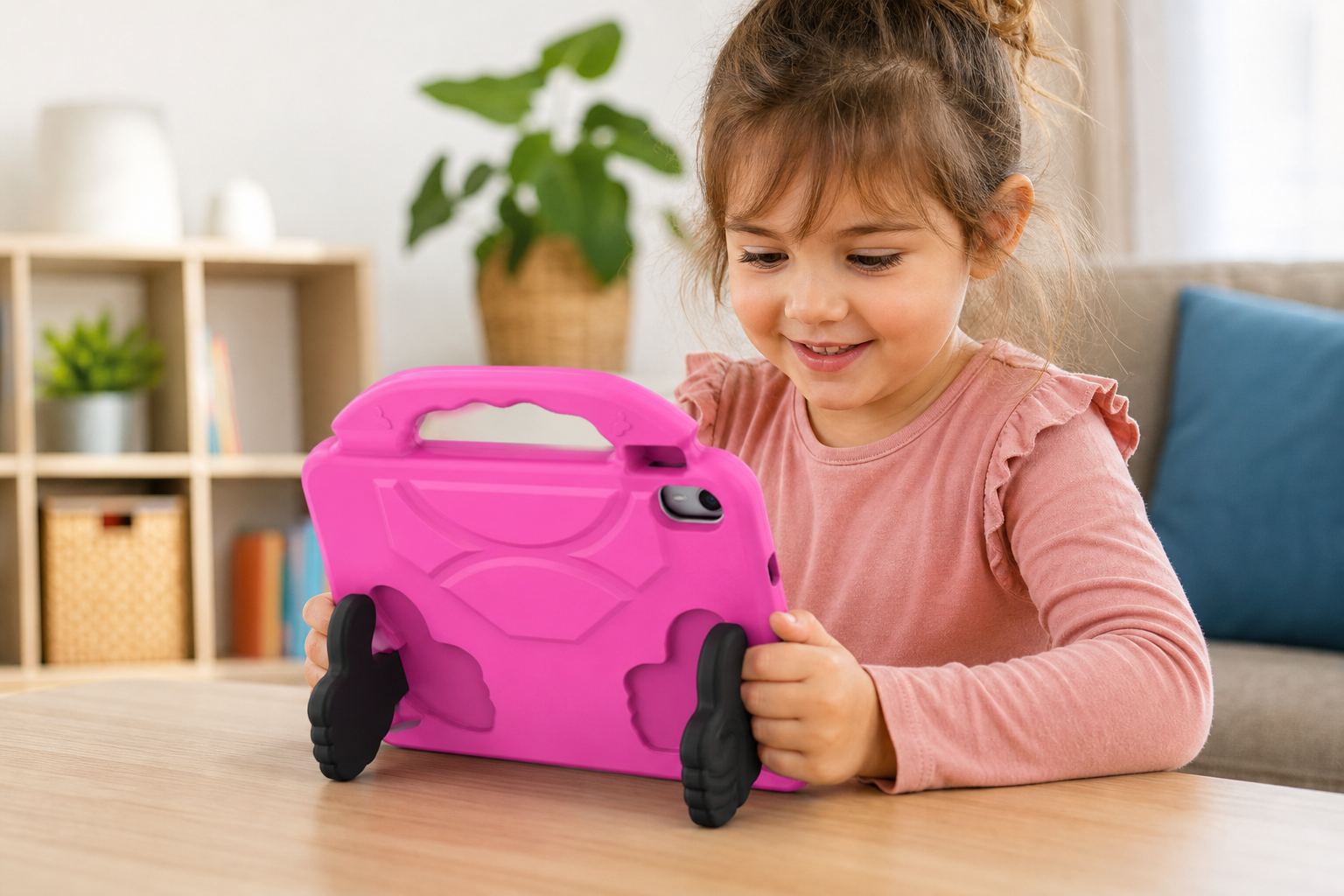
iPad kids cases
Protect your child's iPad from drops, knocks and scratches. Choose a sturdy kids case with grip that small hands can hold easily. Shipped today if ordered before 21:00 on working days.
When is a built-in stand useful?
Choose a built-in stand if your child often uses the iPad hands-free, for example for films, reading, educational apps, drawing or video calls.
A stable stand keeps the iPad upright, so it's less likely to tip over or end up flat on the table during a video or game.
Check whether the case offers a portrait or landscape stand. Landscape works well for films and drawing; portrait suits video calls or reading better.
Pay attention to the viewing angle. Your child should be able to look straight at the screen without constantly repositioning the iPad.
On a sofa, bed or other soft surface, a stand is less stable. The unfolded stand also takes up extra space when you're carrying it.
For school and on the go, choose a model that's still easy to hold when the stand is folded away. A stand that sticks out quickly gets in the way.
How do you keep a kids case clean and safe?
Keep the iPad clean and well protected with a sturdy kids case, a screen protector and clear rules about food and drink. Use parental controls if you like.
Wipe EVA, silicone or TPU regularly with a slightly damp cloth and mild soap. Don't use harsh cleaning products or solvents, and check the product instructions if you're unsure.
Pay particular attention to the edges, handle and stand. That's where dirt and fingerprints build up fastest.
Check the cut-outs for the charging port, speakers and camera for dust or crumbs, and clear them carefully.
Check the case regularly for tears, loose parts and wear. Replace it when this reduces the protection.
Let the case and iPad dry completely before you use or charge the iPad again.
Start by finding your exact iPad model. Then decide whether you mainly need drop protection, extra grip, a sturdy handle or a stand. For young children, a light EVA case often works well; choose silicone for extra grip or TPU for a slimmer case. Check your model number now and browse the matching childproof iPad cases at directcases.com.