How does noise cancelling work? With active noise cancellation (ANC), microphones pick up surrounding sounds. Your headphones or earbuds play a sound that counteracts them, so you hear less of what’s going on around you.
What’s the difference between passive isolation and active noise cancellation?
Well-fitting earbuds or ear pads block some of the sound around you. Active noise cancellation reduces it further by producing an opposing sound wave.
| Feature | Passive isolation | Active noise cancellation (ANC) |
|---|---|---|
| How it works | Mechanical | Electronic |
| Method | Physical material blocks sound | An opposing sound wave cancels out incoming sound |
| Power required | No | Yes (battery) |
| Works best on | Unpredictable, high-pitched sounds such as voices | Steady, low-frequency sounds such as engines |
Constantly measuring sound and calculating an opposing wave takes battery power. When the sound around you changes, the chip has to recalculate immediately to maintain the same level of noise reduction.
What can you still hear with noise cancelling?
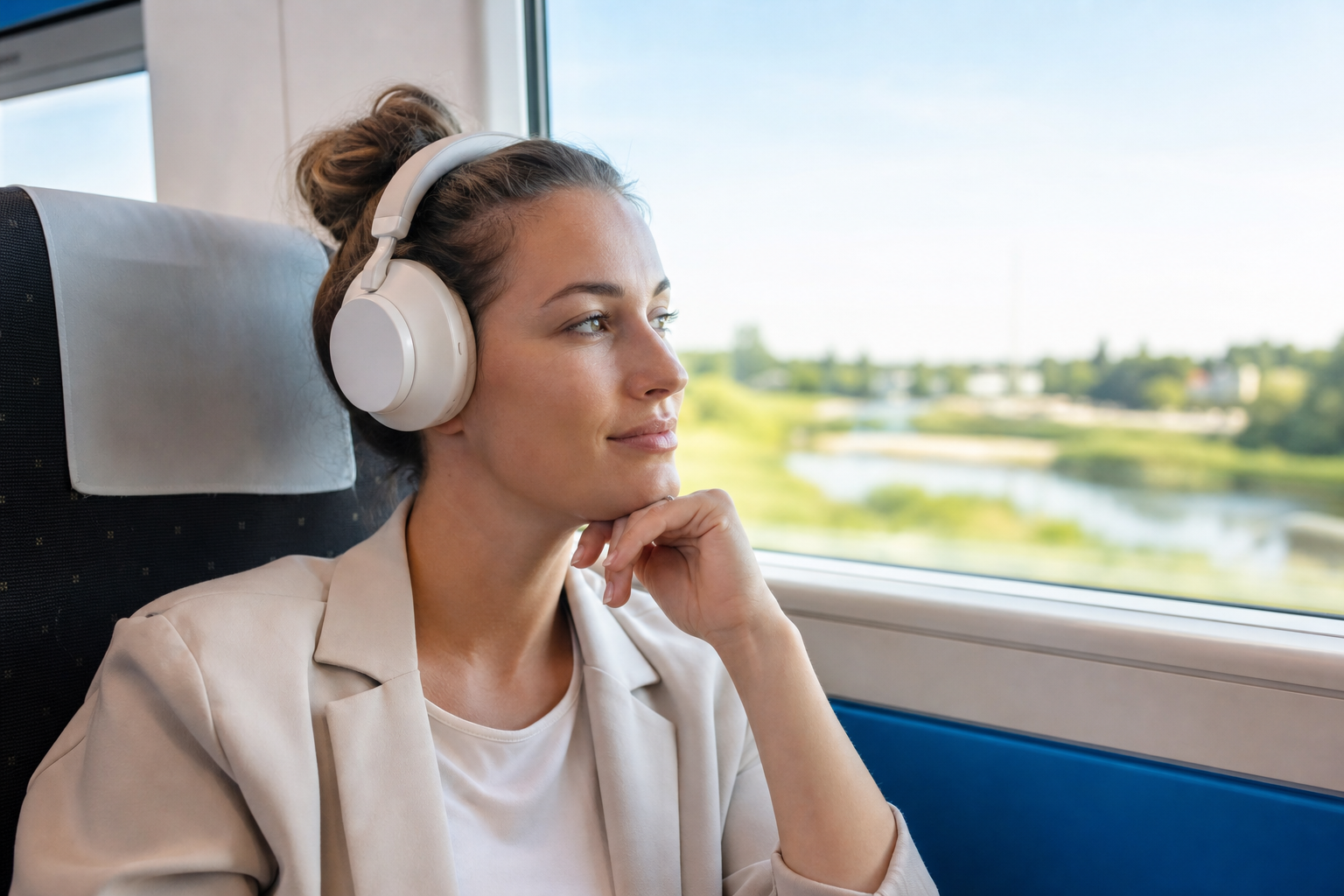
Imagine you’re on a train. The low rumble of the wheels fades when you turn on your headphones, but you can still hear the passengers laughing across from you. That’s a limitation of active noise cancellation.
Noise cancelling can’t give you complete silence. The chip in your earbuds takes a fraction of a second to calculate the opposing wave. That works well for a steady tone, but the system can’t react in time to every sudden change.
| Type of sound | Examples | Result |
|---|---|---|
| Steady, low-frequency sounds | Aircraft engines, humming air conditioners, rolling trains | Strong noise reduction. A predictable pattern makes it easy to keep producing the same opposing sound wave. |
| Unpredictable, high-pitched sounds | Colleagues talking, phones ringing, alarms | Still partly audible. The frequencies change too quickly for ANC to cancel them out immediately. Good passive isolation does most of the work here. |
Many newer audio devices use adaptive noise cancelling, which automatically adjusts the level of noise reduction as your surroundings change. If you walk from a quiet office into a busy train station, the system responds right away. That keeps the listening experience more consistent without having to adjust sliders in an app.
Hearing health and everyday use of noise cancellation
Specs only tell you so much about noise cancelling earbuds or headphones. Once you start using them every day, practical questions come up. Does it work without music? And what does it mean for your hearing?
Having a device constantly play an opposing sound into your ears can raise questions about how it works and whether it’s safe. Here’s what to know about using it and what it means for your ears.

Can you use noise cancelling without music?
Yes. Active noise cancellation works independently of music. When you switch on your headphones or earbuds, the electronics start up. The microphones pick up ambient sound, and the chip continuously calculates the opposing wave.
You can reduce the noise around you without playing any audio. Some people wear their headphones like electronic earmuffs when they need to concentrate on work or studying.
The same feature can help when you’re traveling. It cuts the constant hum of an airplane engine or train, making it easier to fall asleep in noisy surroundings. With less background noise, listening can also feel less tiring.
Check your device’s settings. Some models switch to standby automatically if they don’t receive a Bluetooth signal for a while. If you want to keep using noise cancelling on its own, turn off that timer in the app. The processor keeps working, so the battery still runs down.
Can noise cancelling damage your hearing?
Noise cancelling reduces background sound, so you can often listen to music at a lower volume. For your hearing, both volume and listening time matter.
Now you know how the microphones and audio processor create an opposing sound wave and why fit matters. That can help you narrow down your options.
Browse directcases.com and filter for in-ear or over-ear models to find a pair that fits the way you like to listen.