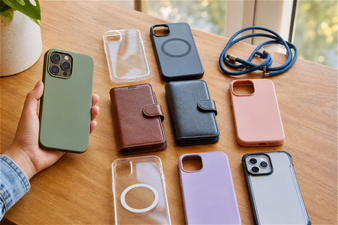
Bought a new smartphone and wondering what the best phone case material is? The choice ranges from shock-absorbing silicone to faux leather with a refined finish. Compare the materials to find a case that suits how you use your mobile phone and how much protection you want.
What types of phone cases and materials are there?
The material affects how your mobile phone looks and how well it is protected. It also affects how well it withstands a hard fall, how much grip you have and how heavy the device feels in your pocket. A smooth case slips easily into your bag, while a grippier finish helps stop the device slipping out of your hand when you call or text.
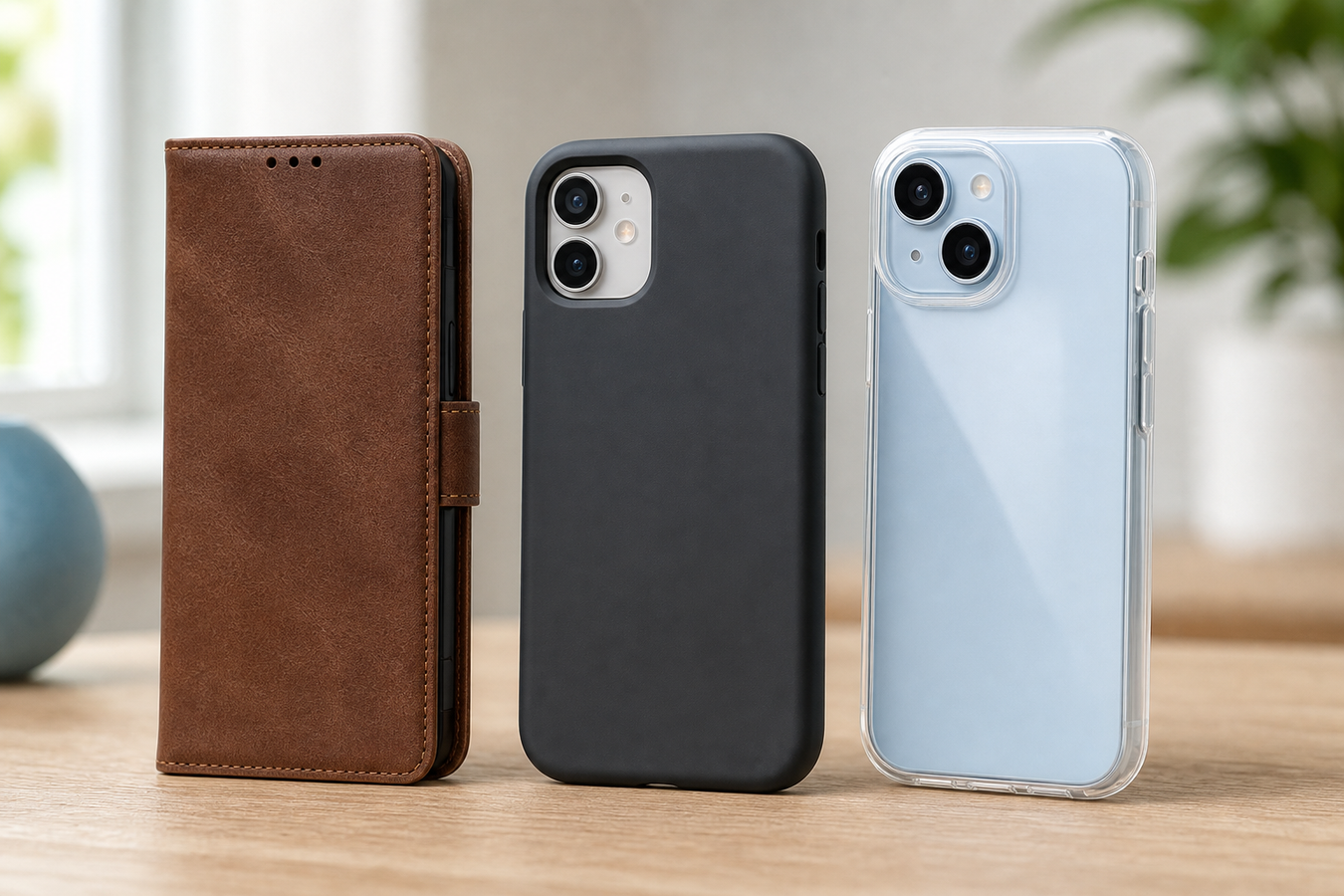
Not every material suits every case style. A slim back cover and a wallet case are quite different to use. A back cover protects only the back and sides, leaving the screen easy to check.
A wallet case covers the whole mobile phone and often includes extras such as card slots. Brands such as Mobigear and Mobilize make these types of cases in nearly every material.
Silicone and TPU: flexible materials with a firm grip
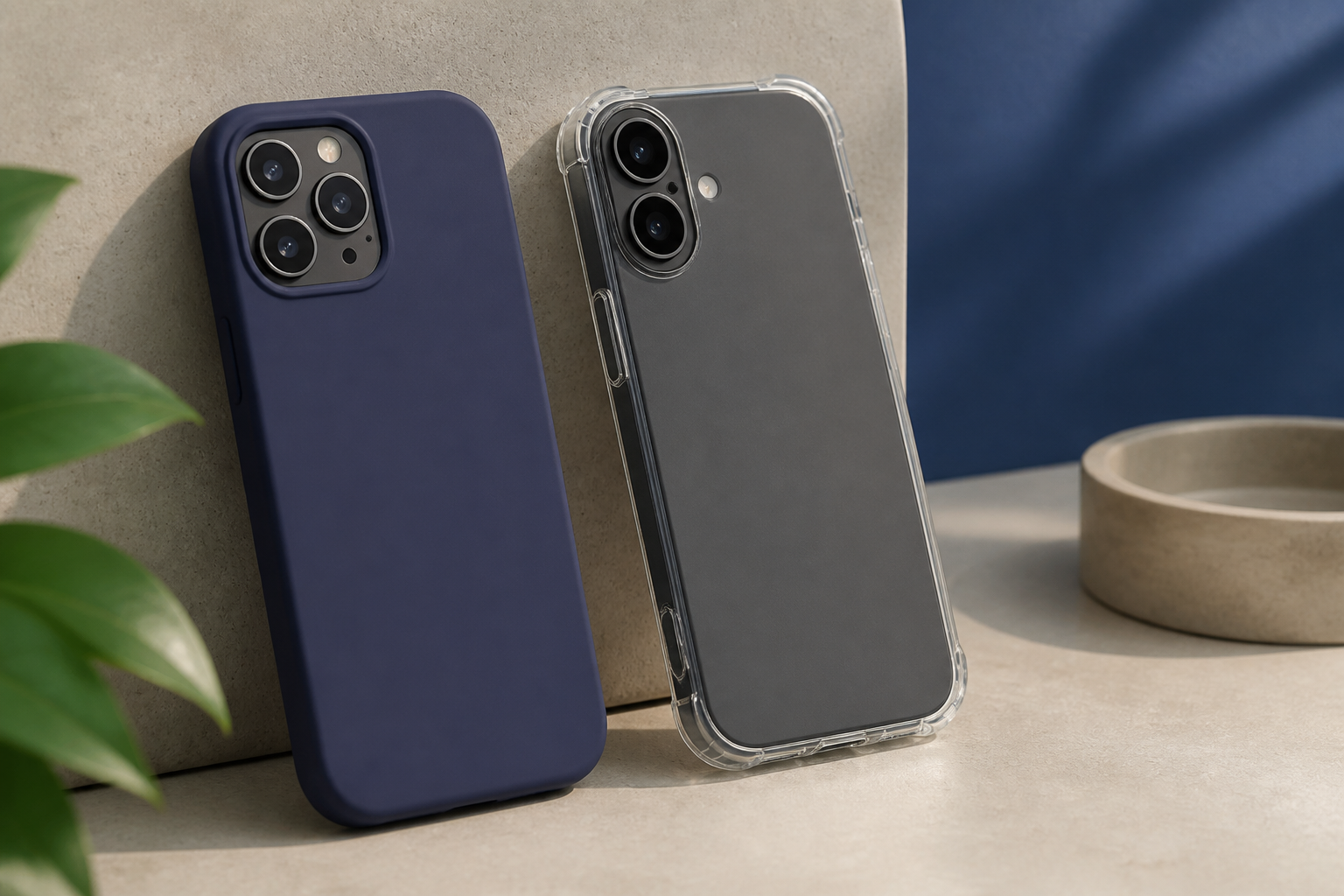
Flexible plastics are popular for back covers because they combine a slim profile with effective drop protection.
Drop protection. Comparing a TPU case with a silicone case? Check whether a drop test is listed for the specific case.
Grip: Both materials are naturally grippy, so your mobile phone is much less likely to slip out of your hand. Silicone feels softer, while TPU is slightly firmer and holds its shape better.
Fit. Pick a case made for your model and check that the buttons and ports are easy to use.
Everyday use and sport: If you want a slim back cover that protects your mobile phone without getting in the way during daily activities or exercise, consider TPU or silicone.
Choose TPU if you want a case that will not stretch over time. If you often carry your mobile phone in a tight trouser pocket, avoid silicone. Its grippy surface attracts lint and makes it harder to take the device out of your pocket.
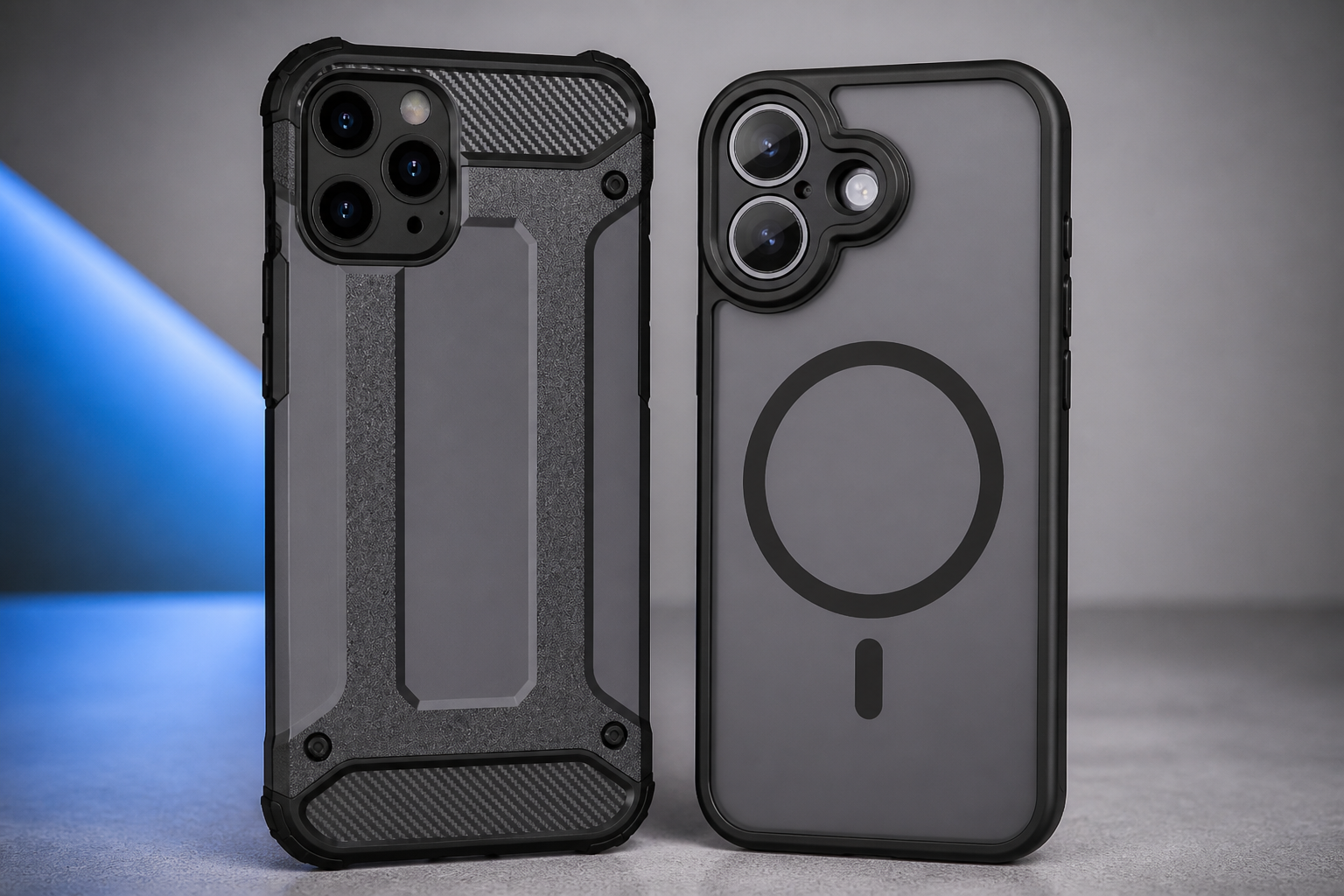
Rigid plastic: lightweight protection
Rigid plastic, often polycarbonate, is highly scratch-resistant and long-lasting. It holds its shape for years and resists discolouration, unlike cheaper clear cases. It is also lightweight and adds very little bulk.
A polycarbonate back cover lets the design of your smartphone stand out while giving it basic protection against scratches and dirt. Rigid plastic does less to cushion heavy knocks because it lacks the give of rubber or TPU. Choose it if you want a slim case, but avoid it if your mobile phone often lands on tiles or asphalt.
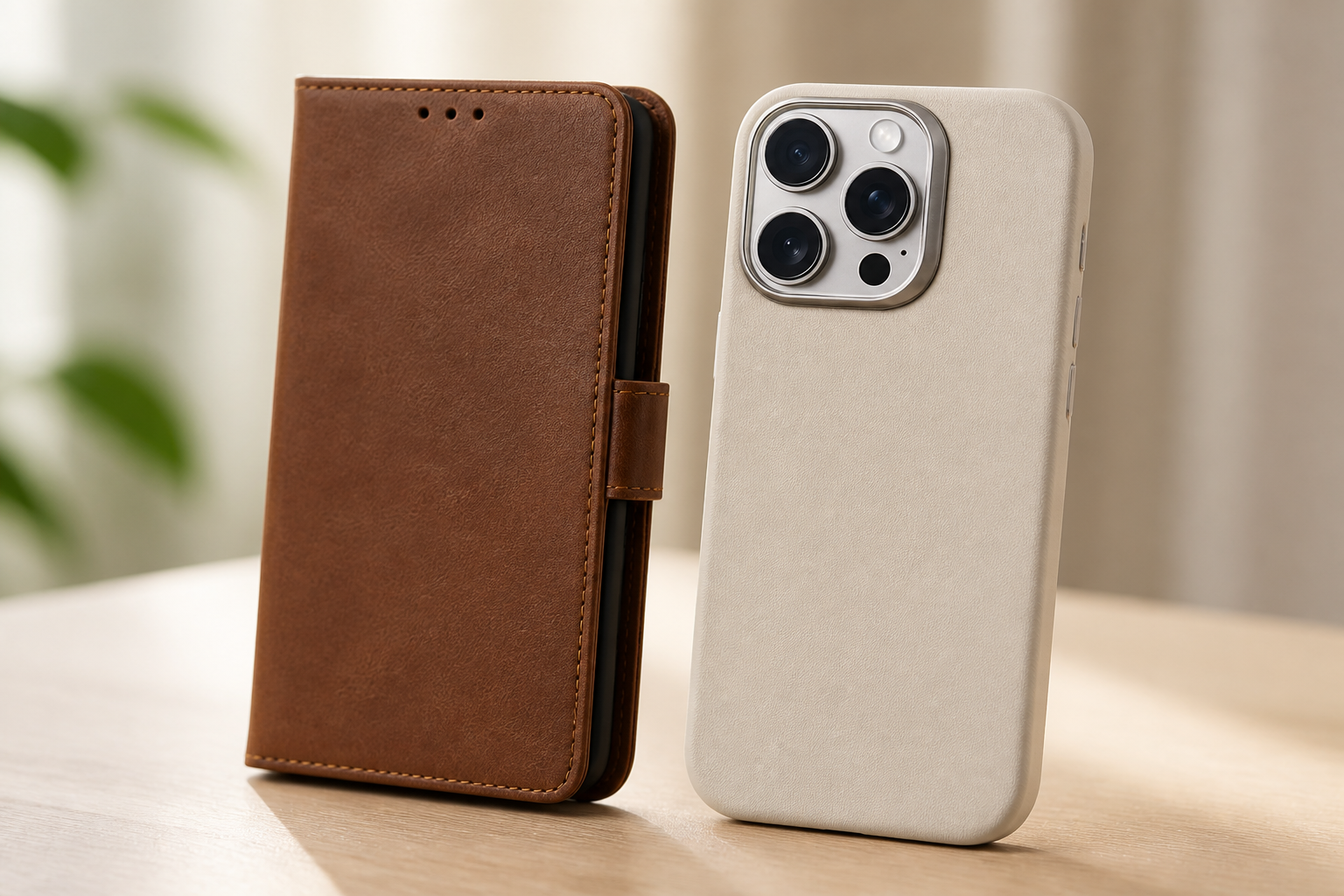
Leather and leatherette: a refined finish
Genuine leather gives your mobile phone a smart, professional look. Leather phone cases from brands such as Decoded and Valenta have a refined finish and develop their own patina over time. Leather is naturally tough and protects against sharp objects, keys in your bag and unexpected knocks.
If you like that look but prefer to avoid animal materials, faux leather is an affordable alternative that is easy to care for. Both materials are often used for wallet cases, which cover the screen and offer card slots. Choose genuine leather for a finish that changes with age, or faux leather for an animal-free, water-repellent option with a similar look.
How do the materials compare?
Compare drop protection, grip, weight and thickness side by side to see which case material suits you.
Material |
Drop protection |
Grip |
Weight & profile |
Best for |
|---|---|---|---|---|
TPU / silicone |
High (up to 2 metres) |
Very grippy |
Light to medium |
Active users, sport and everyday use |
Rigid plastic |
Basic (scratch protection) |
Smooth |
Very light and thin |
Minimalists and anyone who carries their mobile phone in a trouser pocket |
Leather or faux leather |
Medium to high |
Comfortable, natural feel |
Medium to heavy |
Work and replacing your wallet (wallet case) |
Hybrid (hard and soft) |
Very high (up to 4 metres) |
Grippy rubber edges |
Heavier and thicker |
Construction workers, outdoor enthusiasts and people who often drop their mobile phone |
Hybrid cases, such as rugged models from Otterbox or Mobigear, pair a hard polycarbonate shell with a soft TPU lining to absorb shocks. These designs offer certified drop protection of up to 4 metres. Choose a hybrid back cover if you work in construction, or TPU if you want a slim case with reliable drop protection.
How to choose a case for your smartphone
With so many case styles available, it can be hard to know where to start. Use these steps to narrow down your options.
-
1
Check your exact smartphone model:
The iPhone 15 Pro has a different camera cutout and thickness from the standard iPhone 15. Check the device settings to confirm your model. A difference of just one millimetre can stop the case buttons from working properly.
-
2
Decide what matters most:
Think about how you use your device every day. Do you need maximum drop protection on a building site, space for cards or a slim case that slips into a trouser pocket?
-
3
Choose a case style:
Pick a style based on what matters most to you. Choose a compact back cover for quick screen access, a wallet case to cover the whole device or a rugged hybrid case for demanding conditions.
-
4
Choose the material:
Consider how you want the case to look and feel. Choose TPU for a grippy finish, polycarbonate for a lightweight profile or genuine leather for a professional look.
-
5
Check compatibility with accessories:
Check whether the case material supports features such as wireless charging. If you use a tempered glass screen protector, make sure the raised case edges do not interfere with it.
These checks help you avoid buying the wrong case and choose one that suits the way you use your smartphone.
Frequently asked questions about phone cases and materials
Which material offers the best drop protection?
Hybrid cases with a hard plastic shell and a soft rubber or TPU lining offer the most drop protection. They absorb heavy shocks and spread the impact, so they can withstand drops of 2 to 4 metres. That is considerably more protection than a standard slim back cover offers.
Does the case material affect wireless charging?
Usually it does not. Most silicone, TPU, plastic and leather phone cases support wireless charging. You may run into problems with very thick hybrid cases, wallet cases full of cards or cases with metal parts, such as a magnetic plate for a car phone holder. If you have an Apple device and want to charge wirelessly, choose a compatible MagSafe case.
What is EVA foam?
EVA foam is a lightweight, highly shock-absorbent material that feels like firm sponge rubber. It is often used in cases for tablets and large mobile phones used by young children. It is child-friendly, easy to clean and protects against rough handling.
Choose a case that suits your style and gives your device the protection it needs. Grippy TPU, slim and rigid polycarbonate and faux leather are different ways to protect your device and help it last longer. Browse all phone cases on directcases.com and filter by your preferred material.